- Community
- News & Updates
- Buying & Selling
- Product Categories
- eBay Groups
- eBay Categories
- Antiques
- Art
- Automotive (eBay Motors)
- Books
- Business & Industrial
- Cameras & Photo
- Clothing, Shoes & Accessories
- Coins & Paper Money
- Collectibles
- Computers, Tablets & Networking
- Consumer Electronics
- Crafts
- Dolls & Bears
- Entertainment Memorabilla
- Gift Cards & Coupons
- Health & Beauty
- Home & Garden
- Jewelry
- Music
- Pottery & Glass
- Specialty Services
- Sports Mem, Cards & Fan Shop
- Stamps
- Toys & Hobbies
- Travel
- Business Insights
- Regional Groups
- Special Interest Groups
- Developer Forums
- Traditional APIs: Orders, resolutions and feedback
- Traditional APIs: Search
- Traditional APIs: Selling
- eBay APIs: Talk to your fellow developers
- eBay APIs: SDKs
- Token, Messaging, Sandbox related issues
- APIs Feedback, Comments and Suggestions
- RESTful Sell APIs: Account, Inventory, Catalog and Compliance
- RESTful Sell APIs: Fulfillment
- RESTful Sell APIs: Marketing, Analytics, Metadata
- Post Order APIs - Cancellation
- Post Order APIs - Inquiry, Case Management
- Post Order APIs - Return
- RESTful Buy APIs: Browse
- RESTful Buy APIs: Order, Offer
- Promoted Listings Advanced
- Seller Meeting Leaders
- 30th Anniversary Celebration
- eBay Live
- eBay Categories
- Community Info
- Events
Turn on suggestions
Auto-suggest helps you quickly narrow down your search results by suggesting possible matches as you type.
- eBay Community
- Buying & Selling
- Shipping
- Re: Shipping options
Options
- Subscribe to RSS Feed
- Mark Topic as New
- Mark Topic as Read
- Float this Topic for Current User
- Bookmark
- Subscribe
- Mute
- Printer Friendly Page
Shipping options

Options
- Mark as New
- Bookmark
- Subscribe
- Mute
- Subscribe to RSS Feed
- Permalink
- Report Inappropriate Content
11-26-2019 01:47 PM
I am new to eBay. How do you determine how much to charge for shipping? I won't know the dimensions of the box when I am first listing an item. Do most sellers charge a flat rate or offer free shipping? It seems too complicated. I will only be selling a few items. The first one cost me way more than anticipated for shipping.
Message 1 of 6
5 REPLIES 5
Re: Shipping options
Options
- Mark as New
- Bookmark
- Subscribe
- Mute
- Subscribe to RSS Feed
- Permalink
- Report Inappropriate Content
11-26-2019 01:53 PM - edited 11-26-2019 01:56 PM
You need to do exactly what you just said you "don't do" - find a box and know the size/weight of an item. Then you can check price on USPS website (just pick furthest zip code (10000 for New York, 90001 for California) and charge that amount.
If item is under 16 oz- can go 1st Class
Over 16 oz. will be Priority
Can get free boxes at Post Office for Priority (for certain sizes- check USPS website for 'shipping boxes to get idea of sizes available)
Must use your own box/envelope for 1st Class
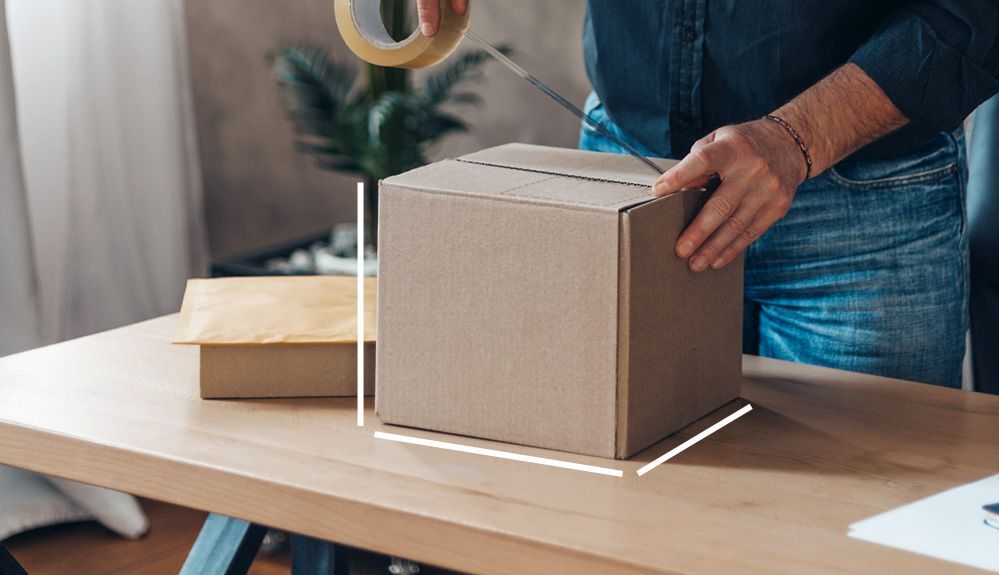
Items over 1 cubic foot (12"x12"x12") will be triple the cost of something under (round figure)
Free Shipping is just for the consumer- you can 'add it' but YOU are paying the shipping, so you still need to know the shipping cost, along with Paypal fee (3%) and Ebay Fee (typically 10% (can be higher/lower depending on product category) added to the cost you will be paying to sell here.
Message 2 of 6
Re: Shipping options
Options
- Mark as New
- Bookmark
- Subscribe
- Mute
- Subscribe to RSS Feed
- Permalink
- Report Inappropriate Content
11-26-2019 01:56 PM
Re: Shipping options
Options
- Mark as New
- Bookmark
- Subscribe
- Mute
- Subscribe to RSS Feed
- Permalink
- Report Inappropriate Content
11-26-2019 03:32 PM
Shipping is one of your LARGEST costs to online selling! So it pays to take some time to learn how it works. hate to say it, but if it is too complicated then perhaps one needs to reconsider selling?
 As you have discovered messing up on anticipated size & weight can cost you a bunch and perhaps wipe out all profits. Continue to do that and your selling career will be short!
  But with some patience and persistence one can learn this new 'language!'
First step is to learn how to use eBay's shipping calculator. I use it and usually measure my items and add 2-4-in to each dimension to give room for packaging and cushioning. I have a scale so I can weigh each item and have found I can safely add 8-oz to most of those weights to account for the box and packing. Often print my labels using the 'estimated' weight & size and have not had a miss yet - but it does take some practice to get there.
Message 4 of 6
Re: Shipping options
Options
- Mark as New
- Bookmark
- Subscribe
- Mute
- Subscribe to RSS Feed
- Permalink
- Report Inappropriate Content
11-26-2019 03:51 PM
measure my items and add 2-4-in to each dimension to give room for packaging and cushioning. I have a scale so I can weigh each item and have found I can safely add 8-oz to most of those weights to account for the box and packing. Often print my labels using the 'estimated' weight & size and have not had a miss yet
This is how NOT to do it. Don't 'add 'fluff' to your dimensions or weight. 8 oz. is the difference between paying $10 on a 2lb+ package and $16 on a 3lb package. 2-4" could be the difference between paying $20 (12x12x12) and $55 (14x14x14).
Find the box, weigh the item with the box with whatever packing you are going to 'safely' pack it in.
Message 5 of 6
Re: Shipping options
Options
- Mark as New
- Bookmark
- Subscribe
- Mute
- Subscribe to RSS Feed
- Permalink
- Report Inappropriate Content
11-26-2019 05:55 PM
@corvettestainless wrote:measure my items and add 2-4-in to each dimension to give room for packaging and cushioning. I have a scale so I can weigh each item and have found I can safely add 8-oz to most of those weights to account for the box and packing. Often print my labels using the 'estimated' weight & size and have not had a miss yet
This is how NOT to do it. Don't 'add 'fluff' to your dimensions or weight. 8 oz. is the difference between paying $10 on a 2lb+ package and $16 on a 3lb package. 2-4" could be the difference between paying $20 (12x12x12) and $55 (14x14x14).
Find the box, weigh the item with the box with whatever packing you are going to 'safely' pack it in.
Well maybe some people want to skimp on the dimensions and padding/packaging to save? Those added dimensions and weights are reasonable assumptions to make sure items are protected. I'd rather see my items get delivered in good shape and avoid SNADs when they experience rough handling.
Using the method suggested gives a starting point when using the shipping calculator and if the cost is prohibitive, then one looks for reasons why (too many inches or too much weight) and then can evaluate IF they think they can skimp on those two and still have the item delivered safely. Finding the EXACT box and weigh can be the best way especially if one is using calculated shipping, but the method I have used for years works for me and I have NEVER paid more than I need to. I also have to think that the frequent issues of "I sent the wrong package to the buyer" is a result of prepackaged items (one box looks the same as another?).
Paying $16 on a 3-lb package might be out of line because you might be able to use cubic shipping rates or FRB/RRB that is much cheaper. But we could do hypothetically jousting on this forever. Methods suggested requires use of a scale, tape measure and shipping calculator and is a darn sight better than the 'nothing' or 'eyeball method' OP was using.
So a smart seller might have a stack of pre-assembled FRBs and RRBs sitting next to their table when measuring and listing as a method to see which of those might work and then use the calculator to get the best 'fit'. Have never had many boxes and packing exceed 8-ounces unless it is a fragile item that needs double boxing. But hey, if the cost looks out of line one can always look for ways to skimp on packaging and damage prevention!
BTW - rates for a 2# priority Box to zone 8 is $10.86 versus $15.28 for a 3# Priority Box to zone 8. A difference of $4.42, not $6. A seller would need to evaluate if the additional 4.42 was worth the cost in protection of what they shipped and not just shoot for the smallest lightest package they can find and "hope" the item doesn't get damaged.
I have great success with my methods and design my packages to be able to take a tumble off of the top flight of a stairs onto a concrete floor and still survive. NEVER have I received a complaint about shipping costs or that items were damaged in shipping.
But hey, everyone is free to make their own evaluations and skim on packaging and protection of the items they ship!
Message 6 of 6

About this board
Welcome to the Shipping board! Here you can discuss all things shipping with other members.
For news and more see:Shipping related questions? Start here:
Featured Posts