Urgent: Seller "[Removed by Mod]" Stealing Branded Images & Listings – Harming Legitimate Businesses
Dear eBay Community,
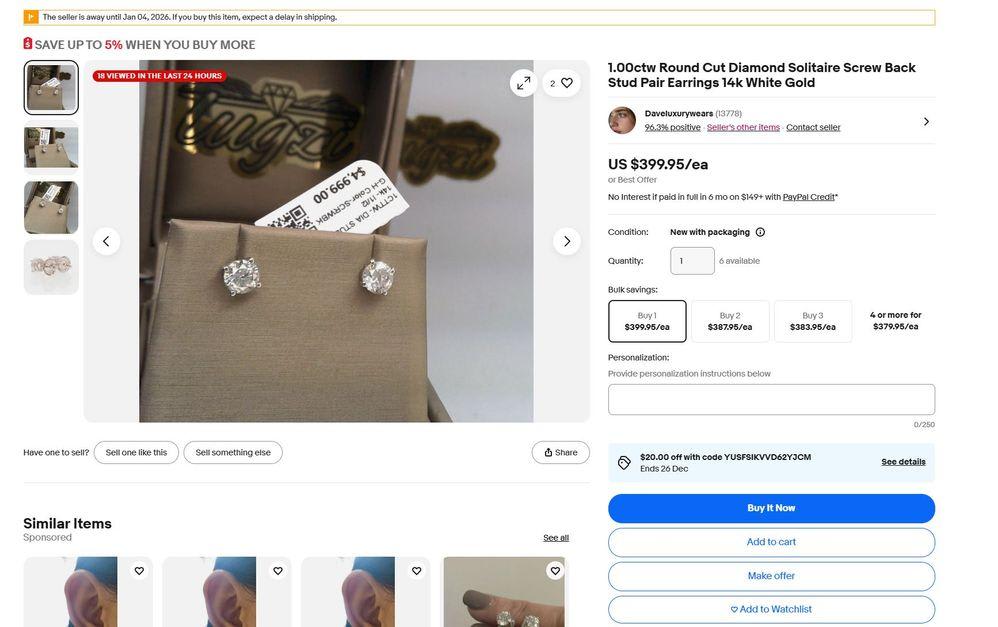
I’m writing today out of deep frustration and concern, not only for my own business but for the integrity of our marketplace. For years, our brand has been systematically targeted by a seller operating under the name “[Removed by Moderator].†(among other names) This seller is directly stealing our copyrighted product images, duplicating our listings, removing our branding and copyright information, and using them to sell what we believe are inferior counterfeit or misrepresented products.
What’s happening:
-
They have copied our images, some of which include models and proprietary designs.
-
They duplicate our listings verbatim, stripping out our brand name and copyright notices from listings and images (they have many listings active reflecting this).
-
They are selling items they cannot possibly have legitimate access to, misleading customers and damaging our brand’s reputation with likely subpar products.
We have taken the official route, filing multiple VeRO (Verified Rights Owner) reports with detailed evidence, including side-by-side comparisons and original copyright metadata. Yet, the problem persists. This isn't just a one-time listing theft; it's a prolonged campaign that undermines years of our hard work.
Why I’m posting here – A Warning and a Plea for Advice:
-
To Alert Other Sellers: If this seller can do this to us, they can do it to you. Theft of intellectual property (IP) on this scale erodes buyer trust for everyone and creates unfair competition where dishonest actors undercut those who invest in creating original content and authentic products.
-
To Seek Community Support: Have any of you dealt with "davesluxurywears" or similar persistent infringers? What strategies, beyond VeRO, have been effective in getting eBay to take definitive action against repeat offenders who clearly violate policy?
-
We implore eBay to look deeply into this account’s history. This is not a simple oversight; it’s a pattern of willful copyright and trademark infringement that hurts consumers and legitimate sellers alike. Reviewing the feedback you can clearly see customers frustration thinking they are getting our products.
The Legal Angle & Our Shared Vulnerability:
A major concern for us, and perhaps for others in this situation, revolves around legality. We’ve asked ourselves:
-
Can we be sued? Potentially, if a customer buys their inferior product thinking it’s ours and has an issue, our brand’s name is attached to that bad experience. This creates liability and brand dilution.
-
Can we sue them? Yes, likely. Copyright and trademark infringement are actionable offenses. The use of our models' likenesses and our brands logo could also raise right-of-publicity issues. However, the cost and complexity of legal action are prohibitive for many small businesses, which is why we rely on eBay’s VeRO system and community standards.
This highlights the core problem: legitimate sellers bear the burden of enforcement against bad actors who operate with impunity, risking our own reputation and finances in the process.
We are at our wit's end. We’ve followed the rules, reported diligently, and yet our stolen imagery continues to be used to defraud customers.
Has anyone else faced this? How did you resolve it?
eBay, please help us protect our business and your marketplace.
Thank you for reading and for any support or guidance you can offer, we hope and strive for eBay to be a successful place for all sellers. Happy Holidays.

dhbookds
We have taken the official route, filing multiple VeRO (Verified Rights Owner) reports with detailed evidence, including side-by-side comparisons and original copyright metadata.
How many times...........may be wrong, but doesn't ebay say they will sanction a seller for repeated violations?
pickapaper
@spacefish*wrote "They have copied our images, some of which include models and proprietary designs." "Our images are not generic catalog shots. They are our specific, copyrighted marketing material (our models, our studio sets, our branded props)." "We pay photographers, hire models, and built sets to create those images."
I can understand you being upset about your listings being stolen but I'm a little puzzled about your photos. I only see one photo with a lady's face in it. A few have what is obviously a mannequin (not human) hand. For the most part they are closeups of the piece of jewelry on a backing, with an overinflated price tag beside it. Maybe you pay someone to take your photos but I don't see where you have hired models or built sets to create your photos.
"They're taking those branded images and using them to sell stuff they can't possibly have—inferior products that tarnish our name when buyers get disappointed."
So, you are saying that people buy jewelry from this other seller thinking it is your jewelry? Why would they think that? If they are a regular customer who has bought several pieces from you before, why would they buy from someone else instead of you? And if someone buys from that other seller and gets inferior products, how does that tarnish your name, especially if the buyer has never seen your store or products? Also, unless you actually make this jewelry yourself, I would assume that the same type of pieces are available to other sellers through some kind of distributor.
Maybe I am just misunderstanding what you are saying.
spacefish*
OPHey, I really appreciate you taking the time to look so closely—seriously, that’s how good discussions happen. You’ve asked some fair questions, and I want to walk through them because I think a lot of this comes down to subtle but really important details.
On the photos and ‘models’:
You’re right, not every shot has a full human model in it. When I say ‘models,’ I’m referring to the professional hands, ears, and profiles you see in our shots—those are often hired models, not mannequins. Even the single photo with a face is a model we paid. The ‘sets’ might look simple, but they’re professionally lit and staged to reflect our brand’s aesthetic. The point isn’t how many faces are visible; it’s that every image is a copyrighted piece of creative work made specifically for our brand. Whether it’s a hand, an ear, or a backdrop, it’s all part of a cohesive branded shoot. That’s what’s being stolen—not just a product snapshot, but our brand’s visual identity.
On why buyers would think it’s our jewelry—and how it harms us:
That’s a great question. Most buyers aren’t comparing seller usernames; they’re shopping by image. If our branded photo shows up in their search, they assume the item is ours—especially if the listing description has been copied too. They might not know our store name yet, but they trust the image. When they receive a cheap imitation, they associate that poor quality with our brand shown in the photo. Even if they’ve never bought from us before, that first impression is now negative. That’s brand dilution—our reputation is being damaged by someone else’s inferior product, before we even get a chance to earn a customer’s trust.
On whether others can sell the same jewelry:
That gets to the heart of what makes this dishonest. If another seller had the same genuine item, they could take their own photos—that’s fair competition. But they’re not doing that. They’re using our photos because they’re selling something different—lower-quality pieces or outright fakes—while riding on the perceived value of our imagery. That’s not competition; it’s misrepresentation. It’s like someone using a photo of a BMW to sell a bicycle with a BMW logo glued on. The photo sets an expectation that the actual item can’t meet.
You’re not misunderstanding—you’re asking exactly the right questions.
This is why I brought it to the community. It’s easy to see this as ‘just photos,’ but it’s really about trust. When images are stolen to mislead buyers, it hurts the buyer, it hurts our brand, and it undermines the integrity of the marketplace for every honest seller here.
Thanks again for pushing for clarity—it helps me explain this better, and hopefully helps other sellers recognize this kind of theft before it happens to them. Appreciate your response and happy holidays!
krazzykats
No one but me sees the brand in this picture. Look at the background, Lugzi's is there.
lugzi | eBay Stores
á“šá˜á—¢
spacefish*
OPThank you so much @krazzykats I truly appreciate your help in relaying our message!â¤
gone.c-33
What I see is a sticker in a jewelry box that matches the seller’s username.
If you look at their listings’ items specifics, they’re all unbranded items and there’s no trace of a trademarked “lugzi†brand anywhere.
stainlessenginecovers
@krazzykats I see it; after Staring at it but it is NOT prominent, not mentioned in the Title and is probably why ebay is ignoring the VERO.
tobaccocardyahoo
Protection of your trademark and copyrights is your responsibility.
Contact an attorney for what the appropriate steps are and how much it is going to cost.
Some infringers might be motivated to stop when receiving a cease and desist letter, others might not stop until they are sued. Others might hold out until they go to trial. Some won't stop even when they have a judgement against them.
Place a value on your reputation and be willing to spend to maintain it.
stainlessenginecovers
@krazzykats @spacefish* My thoughts:
that 'background' name/logo is not what I saw the 10x I looked at the picture; The title is for 1 CT earrings and that is what I see when looking at the picture. The 'name brand' isn't even in the Title (like a 'Tiffany' would be.
gone.c-33
So what you’re really against is the seller using your pictures because they contain a sticker of your logo in them (did you really pay a professional photographer?), right?
Is your logo copyrighted?
stainlessenginecovers
@spacefish* are you talking about your photos being copyrighted because you spent money for a pro, models etc. or are you talking about an actual product that is copyrighted? (which would be patented opposed to a Copyright).
I don't believe you can 'patent' a piece of jewelry unless it's unique, where I don't see anything 'unique' about 1 CT earrings?
Also curious; who believes a $5000 price tagged item selling for $800? Seems like the $5k is just an overinflated number designed to fool someone?
krazzykats
More like identity theft. Hope I'm not repeating information:
Intellectual property policy | eBay
á“šá˜á—¢
spacefish*
OPThose are fair questions, and I'm happy to break this down because I think you're hitting on two things people often wonder about.
First—on patents vs. copyright:
You’re right, jewelry designs can be tricky to patent unless they’re truly novel. That’s not what this is about. We’re talking about copyright on the photography itself and trademark on our brand name and logos. The images—the photos we paid to create—are copyrighted works. Using them without permission is infringement. Using them to sell non-authentic items under our brand name is trademark violation. So it’s not a patent fight; it’s a theft-of-our-creative-work fight.
Second—on pricing:
I hear you. In a world of inflated 'compare at' prices, skepticism is healthy. In our case, the $5,000 price reflects genuine materials (certified stones, precious metals), craftsmanship, and brand positioning—not an artificial markup to trick someone. The problem here isn’t whether our pricing is fair; it’s that another seller is using our photos of that $5,000 product to sell something that’s not the same item for $300. That’s the red flag.
If they were selling the real thing for $300, they’d be losing money. What’s far more likely—and what buyer feedback suggests—is they’re selling lower-quality lookalikes. That’s not a discount; that’s deception. They’re banking on buyers thinking, 'Wow, I’m getting a steal,' when in reality they’re getting a different, inferior product.
So whether our earrings are worth $5,000 or $500 isn’t the real issue here. The issue is:
They stole our copyrighted images.
They’re using them to bait-and-switch customers.
That hurts the buyer, hurts our reputation, and damages trust in the marketplace for all of us.
I appreciate you asking—it’s how we get to the real heart of what’s happening! Happy Holidays!
krazzykats
The brand is being impersonated by a seller using the original poster’s authentic photos to promote lower-quality products under the brand name at a cheaper price.
Imagine how Tiffany’s might react if people stole their website images, posted them on eBay, and then shipped inferior goods.
It’s essentially counterfeit, and fake merchandise using brand names.
á“šá˜á—¢
gone.c-33
Except the items OP sells are listed as “unbranded†and that sticker/logo only looks to be their store name.
caldreamer
What should I do if my image, video or text is being used by another seller?
When you create listings you give eBay and its customers permission, through our User Agreement, to use your images, videos and product details. Your content may be added to the eBay product catalog, and may be used by other sellers in their eBay listings.
You may contact the seller and ask them to remove your image or text if it is not part of the eBay product catalog.
spacefish*
OPHey there, thanks for sharing that link. You're absolutely right—that's the standard policy, and it's super important for everyone to know about it.
That policy is really meant for the catalog. Like if you sell a brand-new sealed coffee maker, and another seller has the exact same model, they can use the catalog image. That's fair and keeps listings consistent.
Where it completely falls apart in my case—and why this is so damaging—is that this isn't about catalog sharing at all.
Our images are not generic catalog shots. They are our specific, copyrighted marketing material (our models, our studio sets, our branded props). The seller isn't using them to list an identical item they possess. They are literally stealing our brand's face—our 'look and feel'—to sell what buyers report are cheap fakes or completely different items.
Think of it this way: It’s the difference between someone using the official Starbucks photo of a latte (catalog) vs. someone taking Starbucks’s entire holiday ad campaign with Santa and red cups, and using it to sell their own mystery coffee blend that tastes nothing like Starbucks. The second one is trademark infringement, counterfeit marketing, and fraud.
The real question this raises for all of us is: What does 'catalog permission' NOT cover? It doesn't cover brand theft. It doesn't cover using someone's copyrighted art to sell counterfeits. And that's the line that's been crossed here.
I appreciate you bringing it up, because it lets us dig into the real heart of the problem. This isn't a gray-area policy issue; it's clear-cut intellectual property theft that hurts buyers and honest sellers alike. Happy Holidays!
kensgiftshop
Ebay allows sellers to use other sellers images and descriptions.
spacefish*
OPThanks for chiming in—I actually used to think the same thing, so I get where you're coming from. But after dealing with this mess for years, I've had to learn the hard way that there's a huge difference between the 'duplicate listing' feature and what's happening here.
You're right, eBay does let you use another seller's photos if you have the exact same item in hand. Like if we both have a sealed, genuine iPhone 13, sure, use the same pics. That's fair.
What this seller is doing is something else entirely. They're not duplicating a listing; they're stealing our actual brand identity. These aren't just generic product shots. We pay photographers, hire models, and built sets to create those images. They're our copyrighted property, like a logo or a website.
They're taking those branded images and using them to sell stuff they can't possibly have—inferior products that tarnish our name when buyers get disappointed. It’s not just a policy violation; it feels like someone photocopying your business card, putting their name on it, and selling your customers a cheap knockoff. It hurts buyers who get scammed, and it hurts us because our reputation gets dragged through the mud.
We’ve filed official VeRO reports (eBay’s own anti-counterfeit system), so eBay has already agreed this is infringement in the past. The fight is getting them to stop a repeat offender who just keeps coming back.
I’m sharing this because if it can happen to us, it can happen to any seller who creates original content. When people can just steal your work to sell fakes, it makes it harder for honest sellers to compete. It’s exhausting.
Hope that helps explain why this isn’t just a ‘duplicate listing’ issue—it’s personal, it’s damaging, and it’s straight-up theft.