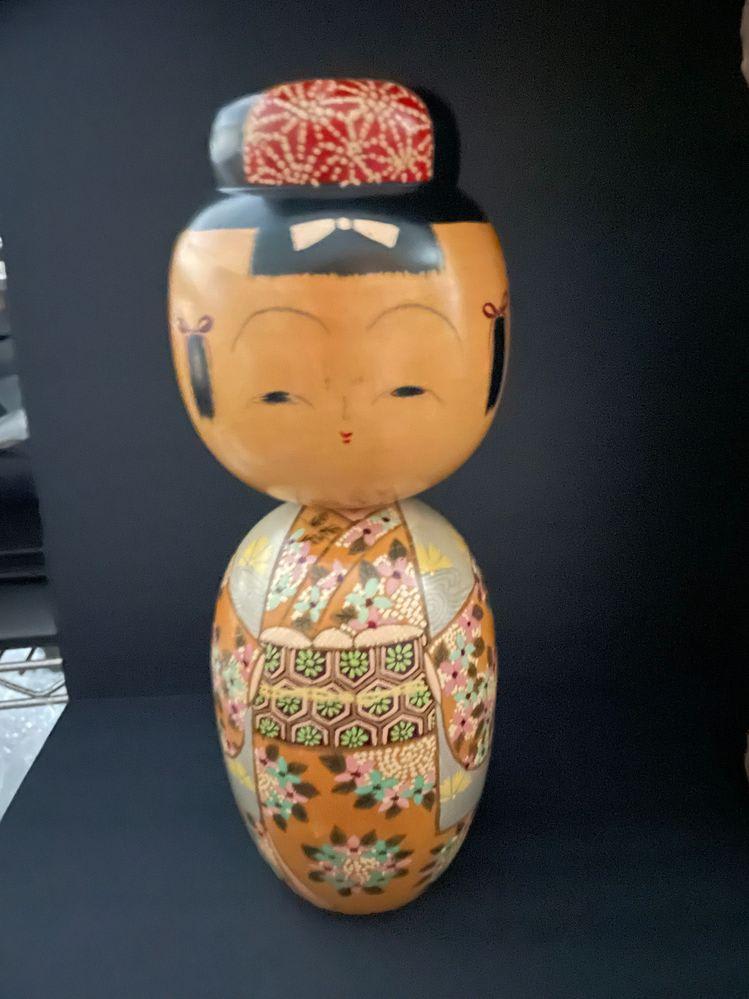
Satou Suigai, born in 1919 in Gunma Prefecture, Japan, originally named Teiichi Satou. He studied Japanese painting under Suun Komuro and adopted the character "ç¿ " (Sui) in his name, becoming known as Suigai.
In 1949, he began creating creative Kokeshi dolls, and in 1949, he established the workshop "Suigetsu."
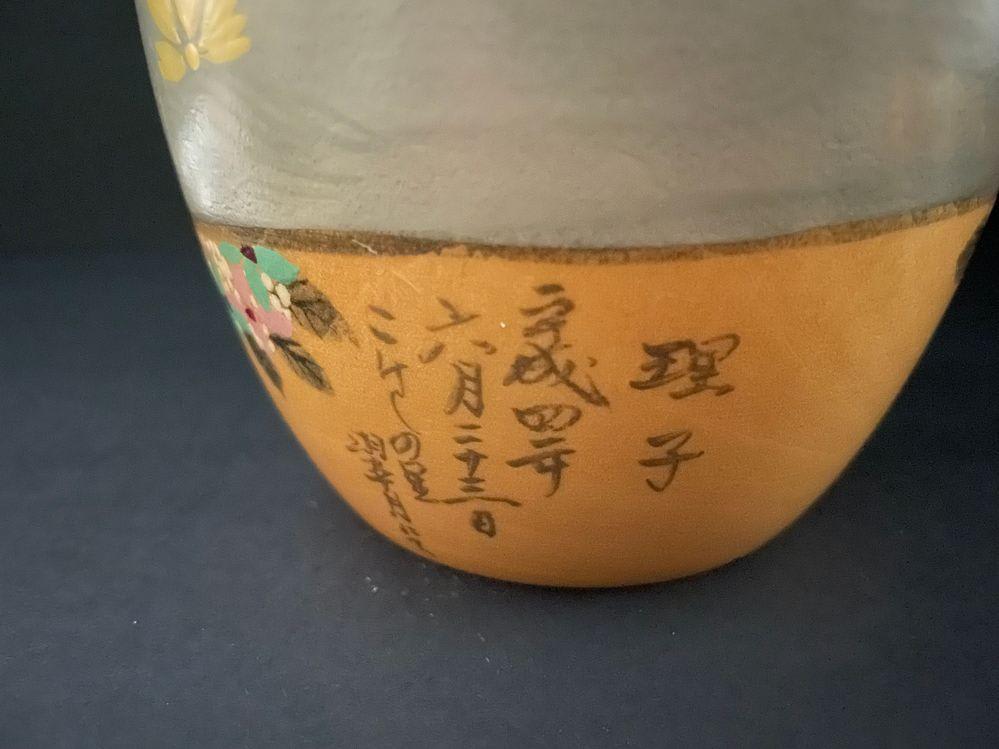
The inscription next to the doll is clearly a memento of the time and place the purchaser wrote it in. Personally, I imagine the purchaser wrote the name of the purchaser's wife or daughter.

conce6631
I found the information about the maker.
Satou Suigai, born in 1919 in Gunma Prefecture, Japan, originally named Teiichi Satou. He studied Japanese painting under Suun Komuro and adopted the character "ç¿ " (Sui) in his name, becoming known as Suigai.
In 1949, he began creating creative Kokeshi dolls, and in 1949, he established the workshop "Suigetsu."
The inscription next to the doll is clearly a memento of the time and place the purchaser wrote it in. Personally, I imagine the purchaser wrote the name of the purchaser's wife or daughter.
waxu_93
Suppose an art work produced in 1949, it is impossible that someone that purchase it would write his own name on it in 1991.
darren_natale
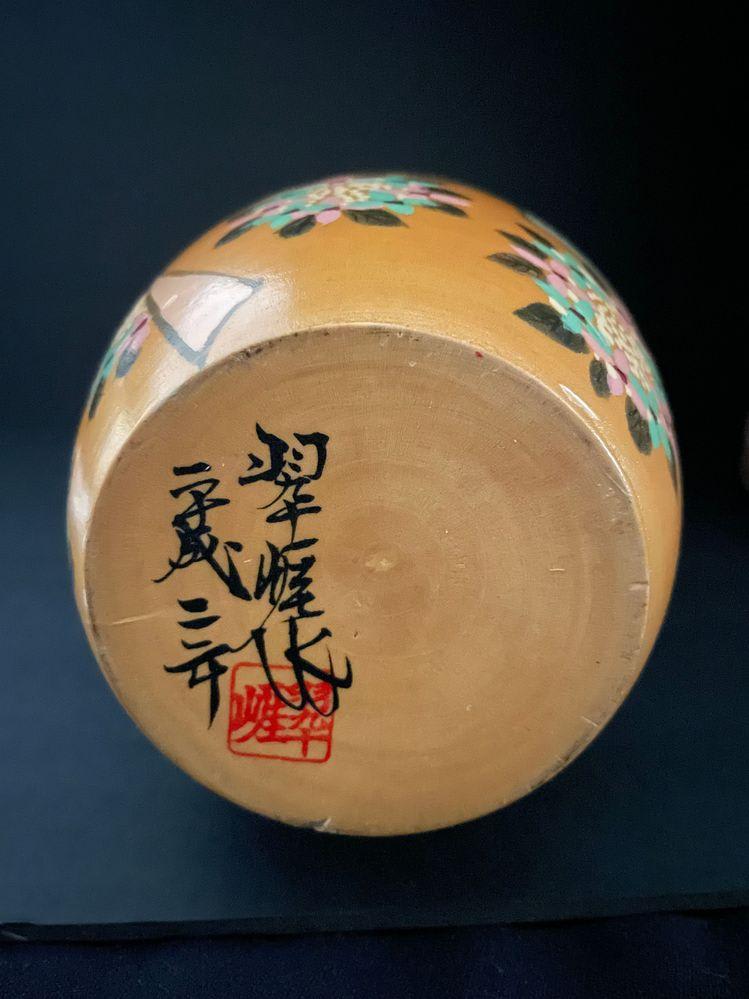
The artist is Suigai Sato. That's the artist's mark in red at the bottom.
waxu_93
This may not necessarily be the artist's signature. It could be the client's name or a greeting to the tourist who bought it.
ç¿ å±‹ï¼Ÿ(maybe the artisan's name)' å¹³æˆ2年(1989 year)
里å(a Japanese woman'name)平æˆ4å¹´6月23æ—¥ (June 23,1991),others words I can not read